


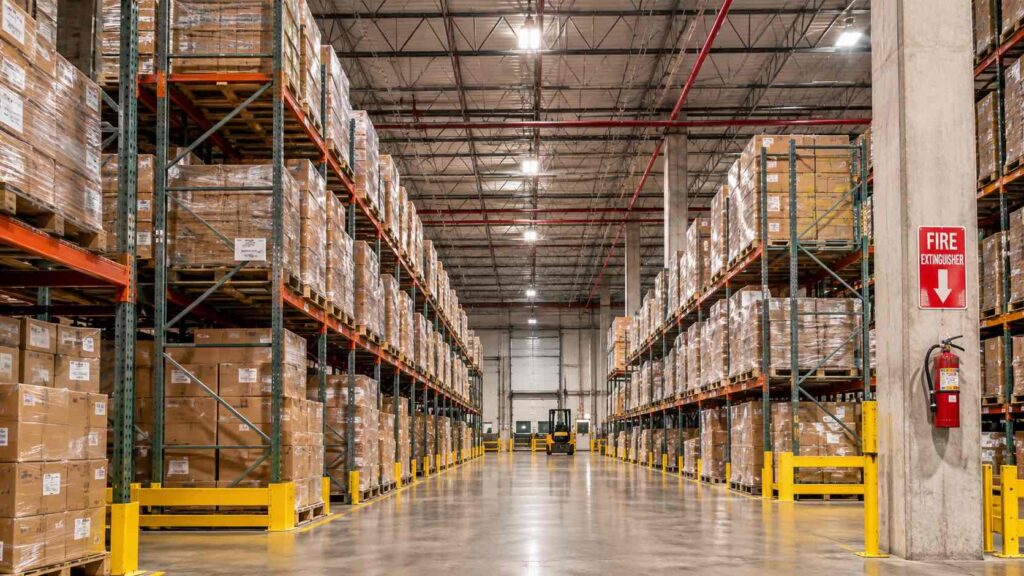
Distribution centers and warehouses face unique fire protection challenges due to high-volume inventory, extensive storage racks, forklifts, and constantly changing operations. These conditions can create hazards that facility managers may overlook during daily operations. Even minor oversights can lead to distribution center fire code violations, failed inspections, costly corrections, and increased risks to employees and property.
Understanding common fire code violations helps facility managers identify potential problems and maintain a safer, code-compliant facility.
Key Summary:
- Improper storage and inadequate sprinkler clearance can compromise fire suppression systems.
- Blocked exits, fire equipment, and electrical panels create preventable safety hazards.
- Routine inspections and maintenance help facilities maintain fire code compliance.
Clearance Issues
Maintaining appropriate clearance throughout a distribution center is essential for fire protection and emergency access. Inventory, equipment, and other obstructions can interfere with sprinkler performance, restrict access to electrical panels, and make it harder for employees to exit safely during an emergency.
- Insufficient sprinkler clearance:Stacking inventory too close to sprinkler heads can interfere with water distribution and reduce fire suppression effectiveness. Clearance requirements vary depending on sprinkler type, storage configuration, and applicable fire codes.
- Blocked electrical panels:Placing pallets, equipment, or inventory in front of electrical panels restricts access during emergencies and maintenance.
- Obstructed fire exits and aisles:Using designated exit routes and walkways for temporary storage can delay evacuations and create serious safety hazards.
Obstructed Sprinklers and Fire Protection Equipment
Even properly installed fire protection systems cannot perform as intended when equipment is blocked, damaged, or improperly maintained. These obstructions can delay fire suppression, limit employee access to essential safety equipment, and create serious challenges for firefighters responding to an emergency.
- Obstructed sprinkler heads:Lighting fixtures, signs, overhead equipment, and improperly positioned inventory can interfere with sprinkler discharge patterns.
- Blocked fire extinguishers:Storing products or equipment in front of fire extinguishers prevents employees from accessing them quickly during an emergency.
- Inaccessible fire department connections:Blocking fire department connections, hydrants, or sprinkler control valves can interfere with emergency response.
Improper Storage
Changes in inventory, shelving configurations, and storage arrangements can introduce hazards and affect existing fire protection requirements. Even routine operational changes can affect how quickly a fire spreads and whether existing sprinkler systems can control it, making proper storage practices an important part of ongoing fire code compliance.
- Improper high-piled storage:Exceeding approved storage heights or changing rack configurations without evaluating sprinkler protection can create conditions that exceed the system’s original design.
- Incorrect storage of flammable materials:Storing combustible liquids, chemicals, and other hazardous materials without appropriate separation and protection can violate applicable fire codes.
- Blocked rack flue spaces:Allowing inventory to extend into required vertical and horizontal flue spaces can interfere with sprinkler water penetration and fire control.
- Excessive combustible waste:Accumulating cardboard, shrink wrap, wooden pallets, and packaging materials increases available fuel and creates unnecessary fire hazards.
How to Prevent Distribution Center Fire Code Violations
Preventing fire code violations requires more than preparing for an annual fire protection inspection. Facility managers should establish consistent housekeeping practices, monitor inventory and storage changes, and maintain routine inspections of sprinklers, fire alarms, extinguishers, and other fire protection systems.
When storage heights, commodities, or rack configurations change, facilities should have their existing fire protection systems evaluated to determine whether upgrades are necessary. A fire protection risk assessment can help identify deficiencies before they lead to costly corrections or operational disruptions.
Protect Your Distribution Center with Fire Systems
Maintaining fire code compliance starts with identifying hazards and keeping protection systems properly maintained. Fire Systems provides comprehensive fire protection services for distribution centers and warehouses, including inspections, testing, maintenance, and installation.
Learn more about our fire protection services for distribution centers and warehouses or explore our fire sprinkler inspection services.
Contact Fire Systems at 770-333-7979 or visit our website to learn how our experienced team can help protect your facility.