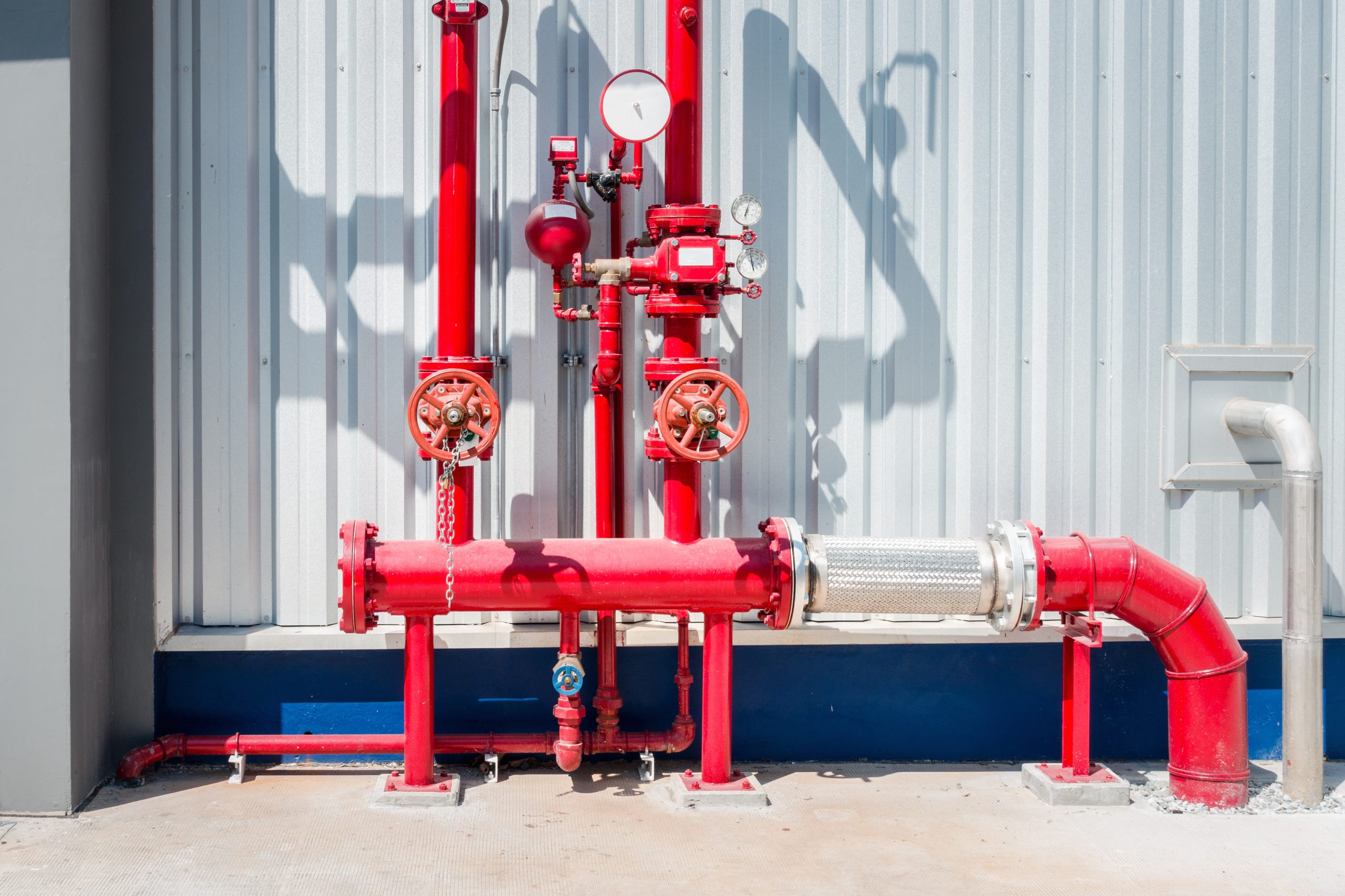
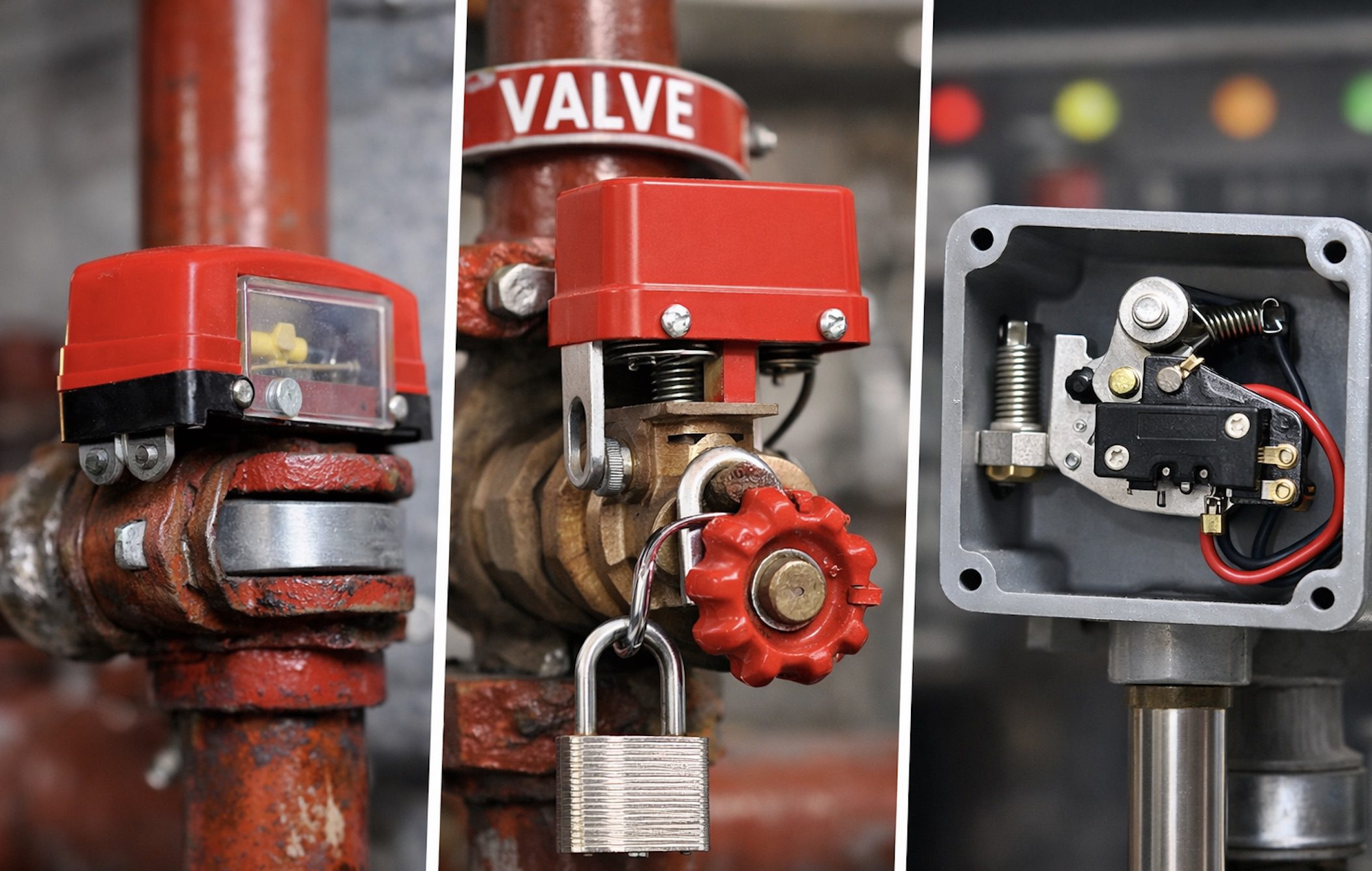
Beyond pipes and sprinkler heads, three of the most important components in a fire sprinkler system’s network are waterflow switches, tamper switches, and supervisory switches. Though each with a different purpose, this network of monitoring devices works continuously to ensure the system is ready to discharge when needed.
Understanding how these switches work and why they matter can be helpful for both facility managers and building owners.
What Is a Waterflow Switch?
A waterflow switch is designed to detect the movement of water inside a sprinkler system.
When one or more sprinkler heads activate due to heat from a fire, water begins flowing through the pipes. The waterflow switch senses this movement and sends a signal to the fire alarm panel to trigger audible and visual alarms and notify the monitoring center of an activation.
Waterflow switches are commonly installed on main sprinkler risers or branch lines. They are calibrated to activate after continuous water movement of about 30 to 60 seconds to prevent false alarms caused by minor pressure changes.
In short, waterflow switches indicate that a sprinkler has activated and water is flowing, meaning a fire may be occurring.
What Is a Tamper Switch?
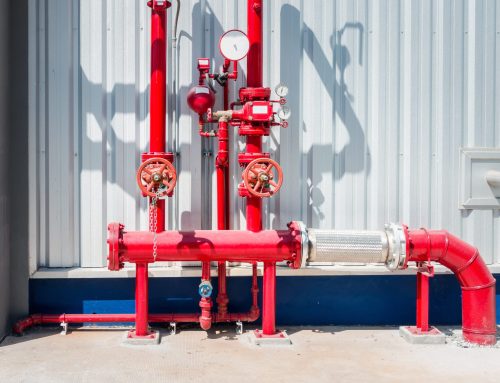
A tamper switch monitors the position of control valves that regulate water supply to the sprinkler system. These valves must always remain fully open for the system to operate properly.
Tamper switches are installed on valves such as OS&Y valves, butterfly valves, gate valves, and post indicator valves. If a valve is partially or fully closed, even accidentally, the tamper switch sends a signal to the fire alarm panel that warns building occupants that the sprinkler system may not function correctly in an emergency.
Unlike waterflow switches, tamper switches don’t indicate a fire, but rather act as a safeguard to prevent accidental shutdowns of the water supply.
What Is a Supervisory Switch?
A supervisory switch monitors important conditions within a fire sprinkler system that affect performance and reliability but don’t involve active water flow. These conditions can impact system readiness even when all valves remain open.
In sprinkler systems, supervisory switches are commonly used to monitor issues such as low air pressure in dry systems, abnormal water supply pressure, fire pump status, water tank levels, and temperatures in sprinkler rooms.
When a supervisory switch detects an abnormal condition, it sends a supervisory signal to the fire alarm panel which then notifies maintenance personnel that service is needed, without activating evacuation alarms.
Supervisory switches are important as they help identify potential problems early, ensuring that sprinkler systems remain operational and ready to respond in an emergency.
Why These Switches Matter
Together, waterflow, tamper, and supervisory switches form the foundation of sprinkler system monitoring. They help ensure fires are detected quickly, water supplies remain available, system issues are addressed early, and buildings remain compliant with fire codes.
Without proper monitoring, sprinkler systems can become impaired or disabled without anyone realizing it. This increases risk to building occupants, property, and overall business operations.
For facility managers, these devices support safer, more reliable buildings. For technicians and fire protection professionals, understanding their function is essential for proper inspection, testing, and maintenance.
Key Differences at a Glance
Each device plays a critical role in keeping fire protection systems operational and compliant. Understanding the differences and purpose of each can be quite beneficial for anyone who manages or owns a commercial facility with a fire sprinkler system.
A quick summary of the different roles each device plays:
- Waterflow switches detect water movement and indicate sprinkler activation.
- Tamper switches monitor valve position and help prevent water shutoff.
- Supervisory switches monitor system conditions and identify performance issues.
Schedule Professional Inspection and Service with Fire Systems
Properly functioning waterflow, tamper, and supervisory switches are critical to your building’s safety and compliance. Regular inspection, testing, and maintenance help ensure these devices work as intended.
If you’re unsure about the condition of your fire protection system or need professional support, Fire Systems is here to help. Our experienced technicians provide comprehensive inspection, testing, maintenance, and repair services for commercial and industrial facilities throughout the Southeast.
Contact Fire Systems today to schedule service, review your system’s performance, or speak with a fire protection expert. Proactive maintenance can help prevent costly failures and protect your building long term.