

Search fire protection topics:

How to Interpret Your Sprinkler Inspection Report
An essential tool in fire safety management is your sprinkler [...]

Types of Smoke Detectors and How to Inspect Them
Not all smoke detectors function the same way, and different [...]

How to Interpret Your Fire Alarm Inspection Report
Understanding your fire alarm inspection report is critical to maintaining [...]

Essential Fall Fire Safety Inspection Tips for Georgia Businesses
Falling leaves and transitional weather patterns introduce unique challenges to [...]

Why Your Fire Alarm System Connects to Your Sprinkler System: Understanding Waterflow & Tamper Switches
When it comes to fire safety in commercial and residential [...]

Fire Alarm Monitoring: Pros and Cons of Cellular vs. Landline/POTS
When it comes to fire alarm monitoring, businesses must choose [...]

What is a Backflow Preventer, and What Maintenance Does It Require?
When it comes to fire protection in commercial buildings, there’s [...]

When Should VESDA Be Used?
VESDA (Very Early Smoke Detection Apparatus) is an advanced, proactive [...]

What are the Advantages of Halotron Fire Extinguishers?
One of the most effective and environmentally conscious options available [...]
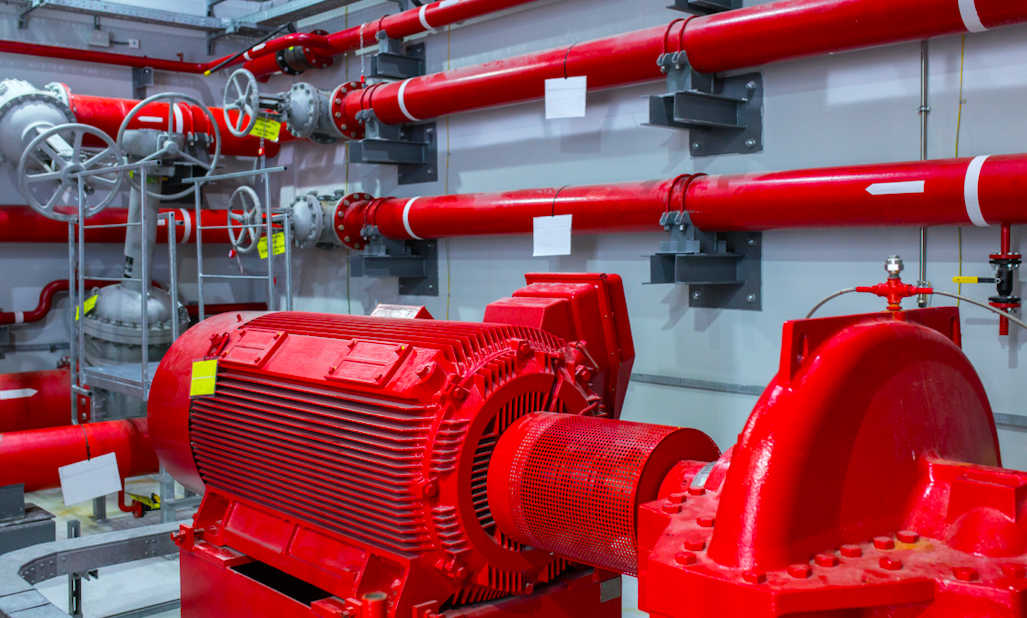
How Does a Fire Pump Work, and What Maintenance Does It Require?
One critical aspect of fire safety in any commercial building [...]

My Fire Alarm Panel Is Beeping: What Should I Do?
A beeping fire alarm panel can be a source of [...]
What Kind of Mobile Fire Suppression System Do I Need for My Heavy Equipment?
Heavy equipment used in industries like construction, mining, agriculture, and [...]
Join Our Community

🔥 Does your poultry processing facility have the right fire protection in place?
Poultry plants face unique fire safety challenges that standard industrial systems may not fully address. High-moisture production areas, corrosive cleaning chemicals, grease buildup, and ammonia refrigeration systems can all affect fire detection, suppression, and overall facility safety.
Our latest article explores the fire protection challenges unique to poultry processing facilities, including:
✔️ Fire detection in wet, high-humidity environments
✔️ Grease and fat accumulation around cooking equipment
✔️ Ammonia refrigeration and chemical hazards
✔️ Employee evacuation and emergency preparedness
The right fire protection strategy should account for your facility's operating conditions while helping protect employees, equipment, and production continuity.
👉 Read full article:
ow.ly/b1U851055mP
#PoultryProcessing #FoodProcessingSafety #IndustrialFireProtection #FireSafety #FireProtection #FacilitySafety #FirePrevention #FireSystems #AtlantaFireProtection #AtlantaFireProtectionCompany #FireProtectionCompany #IndustrialFireSafety

Fire Protection Challenges Unique to Poultry Processing Facilities - Fire Systems, Inc.
ow.ly
Poultry processing facilities face fire protection challenges that go beyond those found in many other traditional industrial environments. High-moisture production areas, corrosive cleaning chemicals...
🔥 What causes data center fires, and how can your facility reduce the risk?
Data centers rely on complex electrical systems, backup batteries, and continuous operations. When equipment overheats, battery systems fail, or human error introduces new hazards, the consequences can be serious.
Understanding the most common data center fire causes is an important step toward protecting your facility, equipment, and business continuity.
Read our latest blog to learn about the fire risks data center operators should watch for and how proactive fire protection can help.
👉 Read the full article: ow.ly/ZA505100Ua6
#DataCenterFireSafety #datacenterfires #fireprotection #firesafety #firesystems
What Causes Most Data Center Fire Events? - Fire Systems, Inc.
ow.ly
Electrical faults, battery system failures, and human error are three significant sources of fire risk in data center environments. Understanding how these common causes of data center fires occur hel...
🚨 Could your facility have fire hazards you’re overlooking?
Industrial fire risks aren’t always obvious. Some can develop gradually as your facility changes, equipment ages, or day-to-day operations evolve.
Five commonly overlooked hazards include:
🔥 Combustible dust
⚡ Electrical rooms and equipment
📦 Changes to storage
🔥 Hot work
⚙️ Overheating machinery
Even if your facility already has fire sprinklers and other protection systems, changes to your operations can introduce new risks that weren’t present when those systems were designed.
How often do you evaluate your facility for new or changing fire hazards?
Read the full article: ow.ly/TCfV50ZVtCs
#IndustrialSafety #FireProtection #FireSafety #FacilityManagement #FirePrevention#AtlantaFireProtection#AtlantaFireProtectionCompany#hazardChange
5 Commonly Overlooked Industrial Fire Hazards - Fire Systems, Inc.
ow.ly
Industrial facilities face a wide range of potential fire hazards, from production equipment and electrical systems to combustible materials and changing storage conditions. Some risks, however, can b...
🚧 Changing the way you store materials can change your fire protection requirements.
Warehouse storage changes involving rack configuration, commodity classification, or storage height can affect the fire hazard inside your facility. If those changes exceed the conditions your existing sprinkler system was designed to handle, you may need to make upgrades to maintain adequate protection and meet applicable requirements.
Before increasing storage heights, changing rack configurations, or bringing new materials into your warehouse, find out whether your fire sprinkler system can handle the new conditions.
Our latest article explains what warehouse operators need to know about:
✔ Rack storage
✔ Commodity classification
✔ Storage height
✔ Fire sprinkler system requirements
✔ When storage changes may require an upgrade
👉 Read the full article: firesystems.net/2026/09/24/why-warehouse-storage-changes-often-trigger-fire-protection-upgrades/
#warehouse #firesprinklermaintenance #fireprotection #WarehouseSafety #NFPA13 #FireCodeCompliance #FacilityManagement #IndustrialSafety and #WarehouseStorage
Why Warehouse Storage Changes Often Trigger Fire Protection Upgrades - Fire Systems, Inc.
firesystems.net
When warehouse operators change the way they store materials, they may find that their existing fire sprinkler system is no longer adequate for the new setup. Warehouse storage changes involving produ...


