


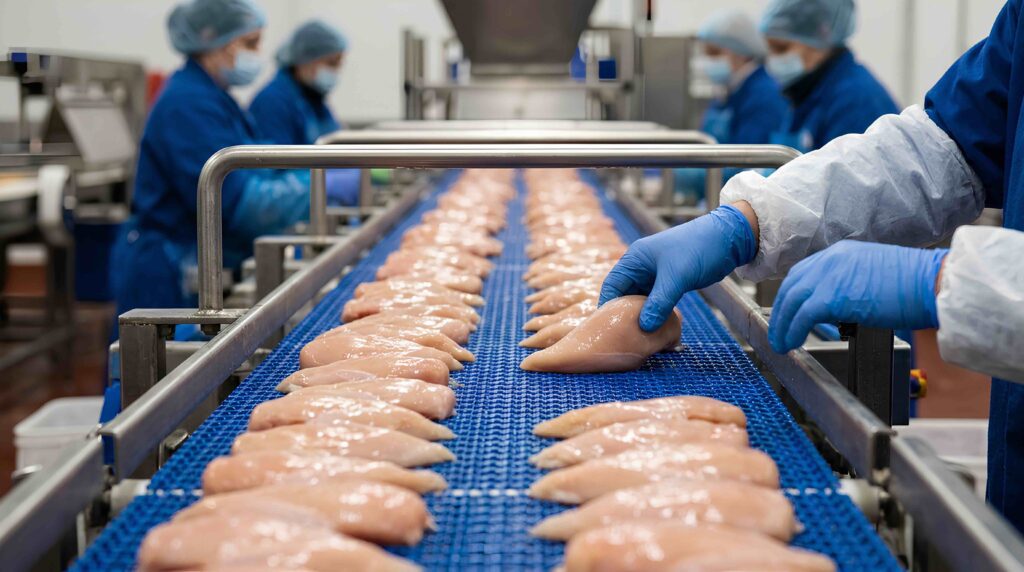
Poultry processing facilities face fire protection challenges that go beyond those found in many other traditional industrial environments. High-moisture production areas, corrosive cleaning chemicals, refrigeration systems, and grease-heavy equipment can all affect fire detection and suppression. At the same time, these processing facilities must also maintain production schedules while protecting employees, equipment, and inventory.
It’s a unique and challenging situation for poultry processing facilities. However; understanding these risks and working with a fire protection company that knowns how to design effective fire protection systems tailored to these unique operating conditions can make all the difference.
Why Standard Detection Fails in Poultry Plants
Frequent washdowns, steam, and high humidity can interfere with conventional fire detection equipment. Water intrusion and condensation may damage devices, while airborne organic dust and production debris can contribute to nuisance alarms. Corrosion from cleaning agents creates another concern, potentially shortening equipment life and compromising system reliability.
Facilities need fire detection for high-moisture environments that can withstand demanding conditions. Depending on the application, aspirating smoke detection systems can provide early warning by continuously sampling air for smoke particles. Designers must account for moisture, airborne contaminants, and ventilation patterns when selecting and positioning detection equipment.
Read More: Corrosion in Fire Sprinkler Systems: What Food Processing Facilities Need to Know
Mitigating Industrial Food Processing Fire Hazards: Grease & Fats
Grease and animal fat accumulation create significant food processing plant fire hazards, particularly around fryers, cooking equipment, ventilation hoods, and exhaust ductwork. Without regular cleaning, combustible deposits can fuel a fire and allow flames to spread through ventilation systems.
Facilities should maintain scheduled deep-cleaning programs and inspect cooking equipment for grease buildup. Appropriate industrial kitchen fire suppression systems should protect cooking operations, including fryers and hood systems. Automatic suppression can respond when temperatures reach the system’s activation threshold, helping control fires before they spread.
Read More: 5 Commonly Overlooked Industrial Fire Hazards.
Ammonia Refrigeration Fire Safety & Chemical Risks
Ammonia refrigeration systems support temperature control throughout poultry processing operations, but leaks create serious toxic exposure risks. Under certain conditions, ammonia can also form flammable mixtures with air. Facilities must address these hazards through proper equipment maintenance, ventilation, leak detection, and emergency response procedures.
Sanitation chemicals require careful handling as well. Products such as peracetic acid and hydrogen peroxide can create additional hazards if employees store incompatible chemicals together.
OSHA’s Ammonia Refrigeration eTool provides guidance on identifying and controlling hazards associated with industrial ammonia systems.
Achieving Poultry Plant OSHA Compliance
Noise, wet floors, and complex production layouts can complicate emergency evacuations. Blocked exits, obstructed pathways, and alarms that employees cannot hear above machinery create additional safety concerns.
Strong poultry plant OSHA compliance starts with accessible exits, clearly marked evacuation routes, properly maintained alarm systems, and employee training. Facilities should also test emergency action plans regularly.
Frequently Asked Questions
What is the biggest fire risk in a poultry plant?
Fire risks vary by operation, but grease accumulation around cooking equipment, electrical hazards, and combustible materials near production equipment are among the top offenders. Refrigeration systems and sanitation chemicals introduce additional hazards as well.
How does moisture affect industrial fire alarms?
Moisture can cause corrosion, damage sensitive components, and contribute to nuisance alarms. Facilities should use only detection equipment rated for the environment and maintain a consistent inspection schedule.
Protect Your Poultry Processing Facility
Fire protection challenges in poultry processing require more than standard industrial equipment. From moisture-resistant detection to specialized suppression systems, every component should account for the facility’s operating conditions.
Fire Systems offers fire alarm and specialized detection solutions for facilities with unique protection requirements.
We help businesses evaluate their fire protection needs and develop solutions that support both facility safety today as well as operational continuity for years to come. Explore our fire protection services via our website where you can also contact us to discuss your facility’s fire protection requirements. Contact us today at 770-333-7979 or visit our website for more information.