


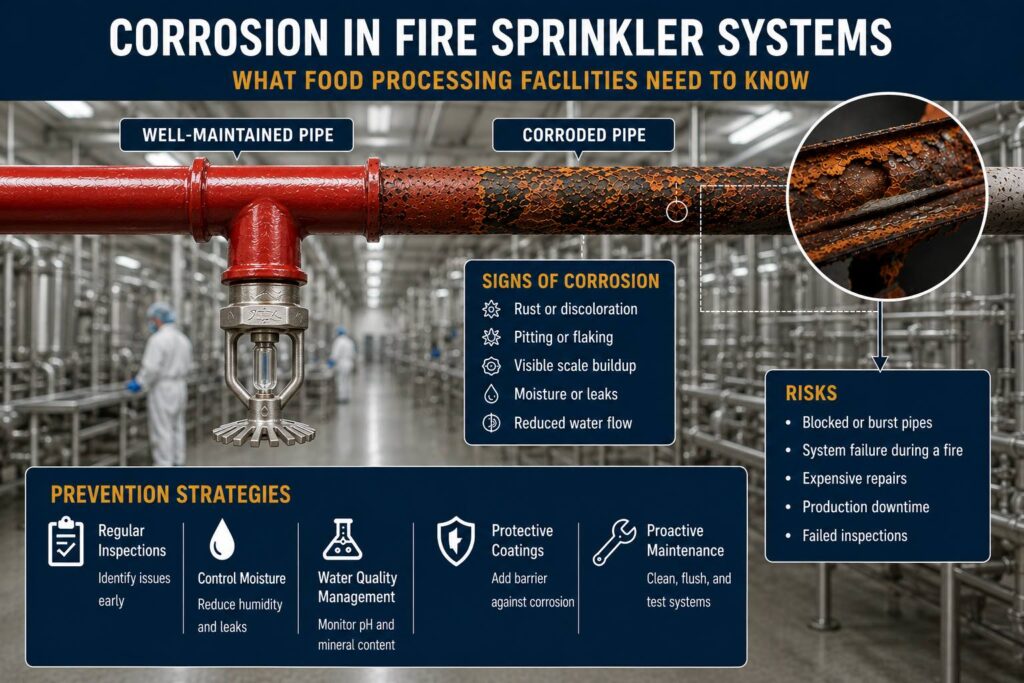
Frequent washdowns, high humidity, refrigeration, and changing temperatures can create conditions that accelerate corrosion in fire sprinkler systems in food processing facilities. As a result, food processing facilities require consistent and ongoing maintenance of their fire sprinkler systems to prevent issues like corrosion.
Fully functing sprinkler systems are critical in these facilities. If left unchecked, corrosion can reduce system performance, increase maintenance costs, and increase the risk of system failure when a fire occurs.
Here’s what you need to know as a facilities manager or owner of a food processing plant to keep your facility safe and protected.
Why Corrosion Is Common in Food Processing Plants
Moisture plays a major role in fire sprinkler corrosion. Food processing plants often experience high humidity, condensation, and frequent cleaning cycles that expose sprinkler piping to moisture. Temperature fluctuations can also create condensation inside pipes, particularly in dry pipe systems where compressed air introduces oxygen. Together, oxygen and moisture create an ideal environment for corrosion to develop.
Another concern is microbiologically influenced corrosion (MIC). This form of corrosion occurs when naturally occurring bacteria grow inside sprinkler piping. As the bacteria multiply, they produce byproducts that attack the metal, creating deep pits that weaken the pipe and increase the risk of leaks.
Signs of Corrosion in Fire Sprinkler Systems
Corrosion often develops inside sprinkler piping long before it becomes visible. However, several warning signs may indicate a problem.
Visible rust on sprinkler components, recurring pinhole leaks, discolored water during testing, and frequent repairs can all point to internal corrosion. Facilities may also discover corrosion during routine inspections or obstruction investigations when rust, scale, or other debris appears inside the piping.
Addressing these issues early can help prevent more extensive damage and reduce repair costs.
How Corrosion Affects Fire Protection
Corrosion does more than damage sprinkler pipes. Rust and scale can break loose and obstruct sprinkler heads or restrict water flow, preventing the system from delivering water as designed. Damaged piping may also leak, reducing system reliability and increasing maintenance expenses.
For food processing facilities, these issues can interrupt production, delay inspections, and create costly operational challenges.
Prevention Strategies
Although corrosion cannot always be eliminated, facilities can slow its progression through proactive maintenance. Routine inspections, obstruction investigations, and internal pipe assessments help identify corrosion before it affects system performance. In dry pipe systems, nitrogen can replace oxygen-rich compressed air to reduce internal corrosion. Promptly repairing leaks and correcting moisture issues also helps protect sprinkler piping from premature deterioration.
Working with an experienced fire protection contractor allows facility managers to identify risks early and develop a maintenance plan based on the facility’s operating conditions.
Common FAQs
1. What is the most common reason sprinkler systems fail during a fire?
The most common reason fire sprinkler systems fail is that the water supply has been shut off before a fire occurs. Corrosion, obstructed piping, damaged components, and inadequate maintenance can also prevent a sprinkler system from operating properly during an emergency.
2. What is the life expectancy of a fire sprinkler system?
A fire sprinkler system can remain in service for several decades when it receives proper inspection and maintenance. However, corrosion, environmental conditions, and water quality can significantly shorten the lifespan of sprinkler piping and components. Regular inspections help identify deterioration before major repairs become necessary.
3. What is microbiologically influenced corrosion in fire sprinkler systems?
Microbiologically influenced corrosion, or MIC, occurs when bacteria colonize the inside of sprinkler piping. These microorganisms produce corrosive compounds that create localized pitting in the pipe wall. Over time, MIC can cause leaks, pipe failure, and reduced system reliability.
Protect Your Facility with Fire Systems
Corrosion often develops out of sight, making regular inspections essential for food processing facilities. Identifying corrosion early helps reduce repair costs, extend the life of your fire sprinkler system, and maintain reliable fire protection.
Fire Systems specializes in inspecting, testing, maintaining, and repairing fire sprinkler systems for food processing facilities and other industrial environments. If you’re concerned about corrosion or want to evaluate the condition of your sprinkler system, contact Fire Systems to schedule a professional inspection and protect your facility before hidden corrosion becomes a costly problem. Call us at 770-333-7979 or visit our website for more information.