


Effective fire protection depends on more than alarms and sprinklers. A comprehensive life safety strategy includes multiple systems that work together during an emergency, from fire alarm systems to fire extinguisher inspections, exit light inspections, and emergency lighting maintenance. Each plays a specific role in protecting occupants and supporting a safe evacuation.
Among the most important of these systems are fire extinguishers, exit lights, and emergency lighting. These devices help people respond quickly to a developing emergency and navigate safely through the building. Because they operate quietly in the background every day, they can be easy to overlook when reviewing inspection schedules and maintenance priorities. Yet, regular testing and maintenance help ensure these systems remain compliant and operational.
Why Fire Extinguishers Are Often Forgotten
Many businesses install fire extinguishers to meet code requirements and then overlook them until an inspection approaches. However, fire extinguishers serve as the first line of defense against small fires.
According to the National Fire Protection Association (NFPA), fire extinguishers require regular inspections and maintenance to ensure they remain accessible, properly charged, and ready for use.
A missing inspection tag, blocked extinguisher, or low-pressure gauge can create compliance issues and increase risk during an emergency.
The Critical Role of Exit Lights and Emergency Lighting
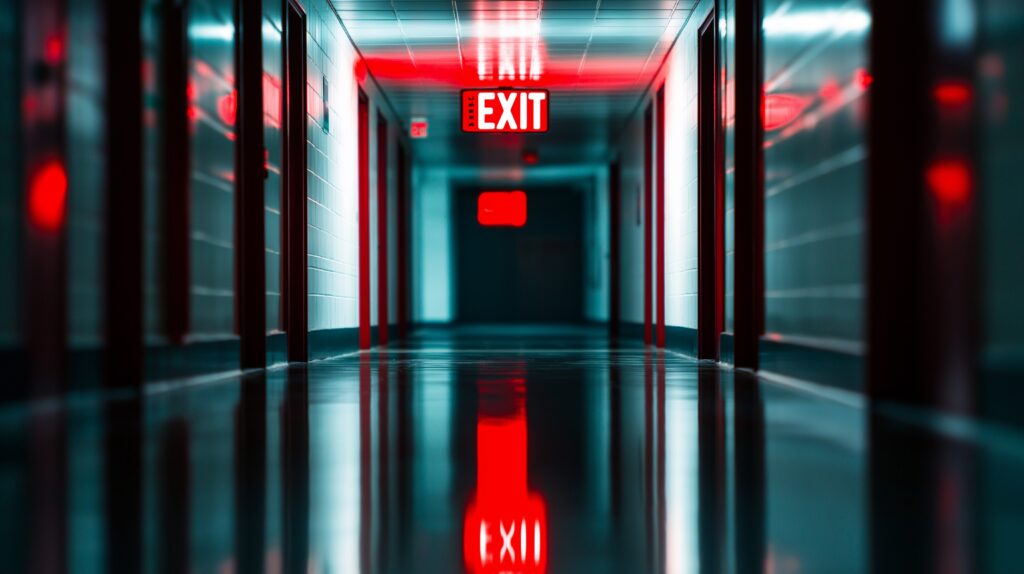
Exit lights guide building occupants toward safe exits when visibility drops due to smoke or power loss. Emergency lighting illuminates exit pathways and stairwells when normal power fails. Together, these systems aid in safe evacuation of a building.
Exit lights and emergency lighting rarely demand attention during normal operations, which makes regular inspection and testing essential for verifying system performance and code compliance. Like any life safety system, exit lights and emergency lighting require periodic testing to confirm battery backup performance, illumination levels, and compliance with applicable codes.
Issues such as burned-out bulbs, failing batteries, and damaged fixtures can leave occupants without guidance when they need to evacuate the building.
How Fire Extinguishers and Exit Lights Work Together
During a fire emergency, occupants may use a fire extinguisher to control a small fire while others begin evacuating the building. Exit lights and emergency lighting then help direct everyone toward safety.
When both systems receive regular inspections, building owners can ensure that they are not only in compliance, but also strengthening their overall fire protection and safety for building occupants.
Frequently Asked Questions
How often should fire extinguishers be inspected?
The NFPA requires monthly visual inspections and periodic maintenance by qualified professionals. Regular fire extinguisher inspections help ensure extinguishers remain operational and code compliant.
Do exit lights need to be tested?
Yes. Exit lights and emergency lighting systems require routine testing to verify battery backup performance and illumination levels. The NFPA 101 Life Safety Code requires a 30-second functional test every month as well as a 90-minute full duration test once a year for all emergency and exit lighting. Written records of both tests must be kept on-site for inspection by the local fire marshal.
What are the fire extinguisher inspection requirements for commercial buildings?
Requirements vary by occupancy type, but most commercial buildings must complete monthly inspections, annual maintenance, and periodic hydrostatic testing when applicable.
What are emergency lighting inspection requirements?
Emergency lighting systems also require regular functional testing and annual duration testing to confirm they provide adequate illumination during a power outage.
What is included in a fire safety inspection?
A comprehensive fire safety inspection should include inspection of a buildings’ fire alarms, sprinkler systems, fire extinguishers, exit lights, emergency lighting, and other life safety equipment.
Protect Your Building with Comprehensive Fire Protection
Fire extinguishers and exit lights may not receive the same attention as larger fire protection systems, but they play a vital role in occupant safety and code compliance.
If your organization already schedules inspections for fire alarms or sprinkler systems, now is the perfect time to review your fire extinguishers, exit lights, and emergency lighting as well. Working with an all services fire protection company is the best way to ensure you’re getting full and complete fire protection coverage.
Contact Fire Systems at 770-333-7979 or visit our website to schedule a comprehensive inspection and ensure every part of your fire protection strategy remains ready and operational at all times.