


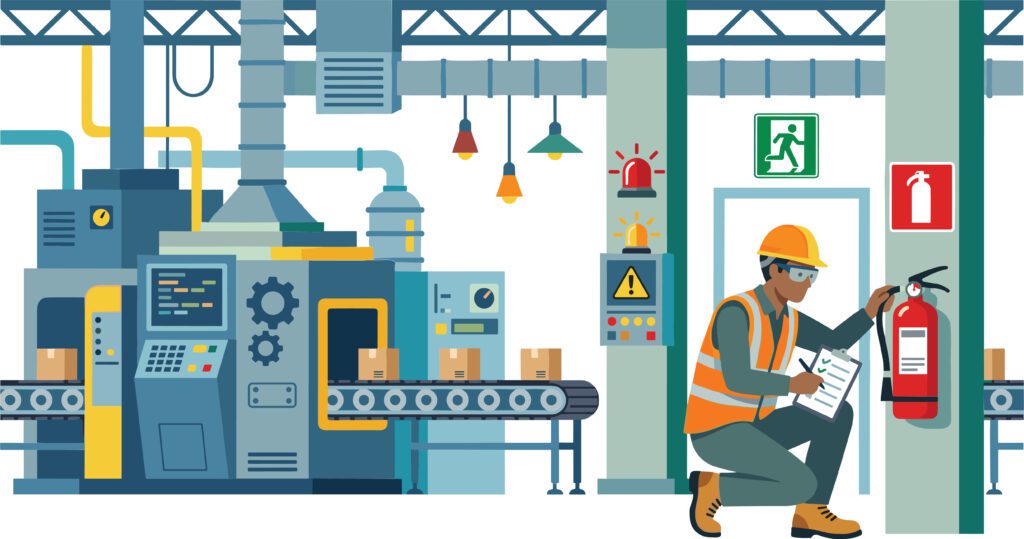
A strong fire protection checklist helps business owners identify problems before they lead to expensive repairs, failed inspections, or even full system failures. Even well-maintained buildings can develop hidden issues that increase safety risks and create compliance concerns.
This is why every commercial property needs a reliable, streamlined fire protection strategy.
Use this simple self-audit to evaluate whether your building’s fire protection systems receive the attention they need.
-
Fire Alarm System
Your fire alarm system should always function properly. Check for damaged devices, trouble signals, or outdated panels. Confirm that inspections and testing remain current. If your alarm system frequently experiences false alarms or service issues, it may require repairs or upgrades.
-
Sprinkler System
Inspect sprinkler heads for damage, corrosion, paint, or obstructions. Storage items should never block sprinkler coverage. Verify that your system receives regular inspections and testing according to fire code requirements. A dependable sprinkler system plays a critical role in reducing fire damage.
-
Fire Alarm Monitoring
A monitored fire alarm system provides faster emergency response. If your monitoring service experiences communication failures or inconsistent reporting, your property may face increased risk. Monitoring systems should always maintain reliable communication with emergency responders.
-
Backflow Prevention
Backflow devices protect your building’s water supply from contamination. Many property owners overlook this important part of their fire protection checklist. Local regulations require annual backflow testing and documentation to maintain compliance.
-
Fire Extinguishers
Fire extinguishers should remain visible, accessible, and fully charged. Check inspection tags to confirm current service dates. Employees should also understand extinguisher locations and how to use a fire extinguisher during an emergency.
-
Exit and Emergency Lighting
Exit signs and emergency lighting help occupants evacuate safely during power loss or smoke conditions. Burned-out bulbs, damaged fixtures, or blocked exits create serious hazards. Routine testing helps keep these systems working when needed.
-
Fire Hydrants
Private fire hydrants require inspection and maintenance just like other fire protection equipment. Damaged hydrants, poor visibility, or restricted access can delay emergency response during a fire event. Your fire protection company should be able to service these hydrants as part of your comprehensive fire protection plan.
What Is a Fire Inspection Checklist?
A fire inspection checklist helps property owners evaluate fire protection systems, safety equipment, and code compliance throughout a building. A commercial fire inspection checklist typically includes alarms, sprinklers, extinguishers, emergency lighting, monitoring systems, and water supply components.
What Are the OSHA Requirements for Fire Protection?
OSHA requires businesses to maintain fire extinguishers, provide clear exit routes, and keep fire protection systems operational. Requirements vary based on occupancy type, building layout, and workplace hazards. Businesses must also maintain inspection records and address deficiencies promptly.
What to Expect During a Fire Inspection?
During a fire inspection, technicians evaluate system performance, inspect equipment condition, and review compliance documentation. Inspectors may test alarms, inspect sprinkler components, verify extinguisher service dates, and confirm proper emergency access throughout the property.
A proactive fire inspection checklist helps businesses stay prepared while reducing risk and avoiding unexpected compliance issues.
Fire Systems provides complete fire protection services for commercial properties, including inspections, monitoring, sprinkler systems, fire alarms, backflow testing, and maintenance. Contact Fire Systems today to schedule an evaluation and ensure your building stays protected year-round.