Mixed climates, high humidity, and rapid temperature shifts can make fire protection in the Southeast a challenge. Facility owners who run businesses amidst these erratic weather conditions often face a variety of environmental factors that directly affect how fire protection systems age and perform.
From prolonged moisture that can corrode sprinkler system components to sudden freezing temperatures that can cause pipes to freeze and burst, being aware of these seasonal risks can help you better understand what you should do to keep your fire protection systems operational year-round.
High Humidity Accelerates Wear on Fire Protection Equipment
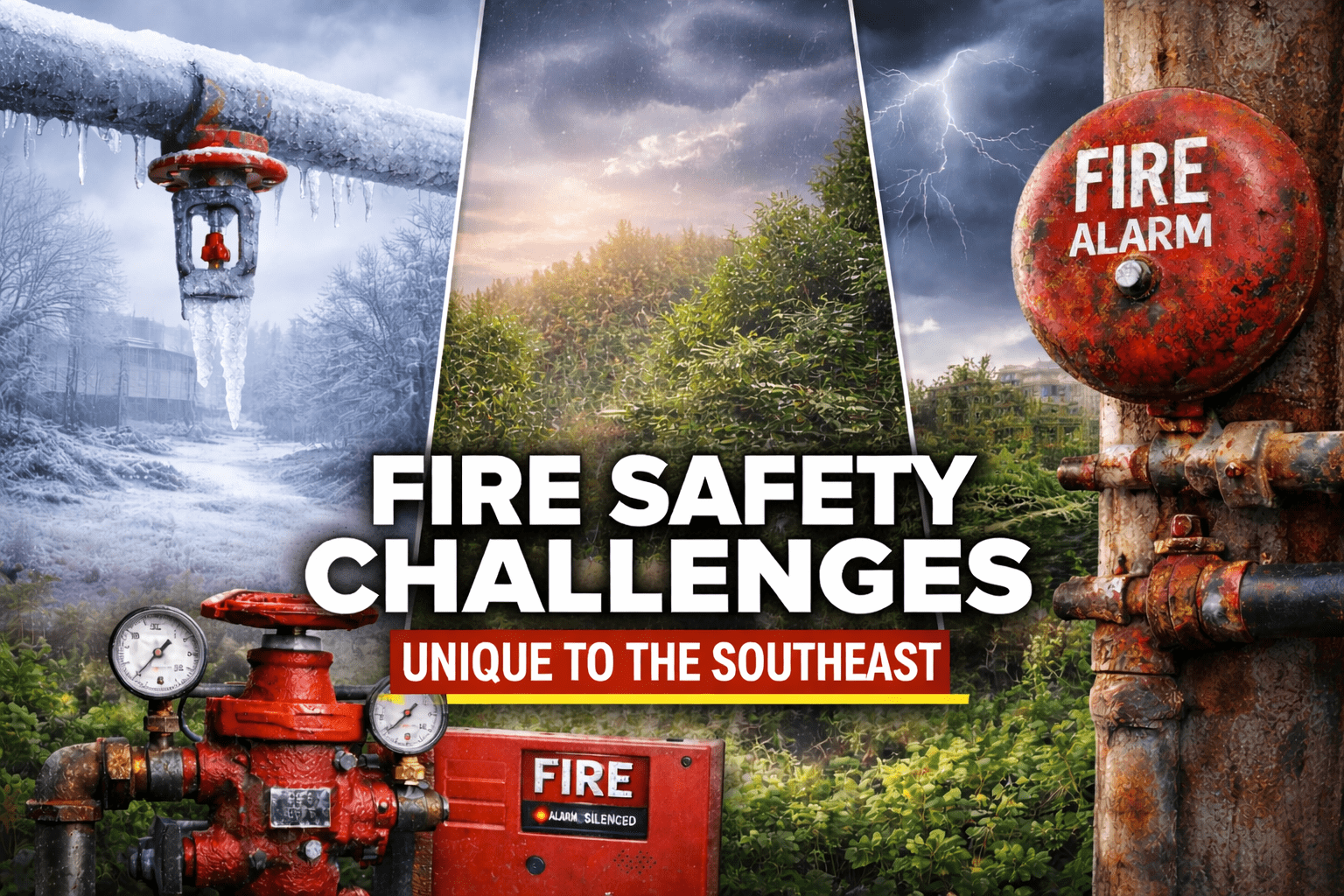
The Southeast is known for long stretches of high humidity. Overtime, these conditions can damage certain components of fire protection systems. For example, excess moisture due to high humidity increases the likelihood of corrosion in sprinkler piping, promotes rust on valves and fittings, and can interfere with smoke detector sensitivity. Even minor corrosion or moisture may lead to blockages or reduced water flow, affecting the functionality of your sprinkler system.
Particularly in coastal areas, salt in the air compounds the issue of corrosion and rust, attacking metal components at a faster rate than in drier environments. You can protect your system by maintaining regular inspections where a fire protection professional can check for corrosion and conduct internal pipe inspections.
Rust and Corrosion are not just on the Exterior
The interior of sprinkler piping is often where the most severe deterioration occurs. Microbiologically influenced corrosion (MIC), oxygen-related corrosion, and trapped moisture create pitting and scaling that can restrict flow or even cause pinhole leaks. Corrosion causes leakage and water damage, impairing system functionality. And if left untreated, it often requires replacement of the entire system.
Staying ahead of internal corrosion is one of the most important steps building owners can take to protect their sprinkler system. Maintain your sprinkler inspections; and if corrosion is detected, work with a fire protection company that can recommend appropriate mitigation to help extend the life of your fire sprinkler infrastructure.
Southeastern Cold Snaps & Storms Introduce Critical Fire Safety Hazards
Although the Southeast is known for its heat and humidity, winter temperatures can still plunge low enough to create dangerous conditions for fire sprinkler systems, particularly when temps dip below zero. Icy and freezing weather increases the risk of frozen pipes, cracked fittings, and ruptured sprinkler lines, especially in parking decks, attics, stairwells, and other unheated areas common to commercial buildings. Seasonal maintenance, proper insulation, and winterization plans are essential in these environments.
Hurricane season and seasonal thunderstorms can also bring surprising fire safety challenges that range from power outages that impact fire pumps and alarm monitoring to wind-driven rain that infiltrates electrical components.
Why Regional Expertise Matters
With decades of experience serving the Southeast, Fire Systems understands how regional conditions like humidity, corrosion, coastal exposure, high heat, and winter freezes impact fire protection systems. Our Atlanta-based fire protection team provides installation, inspections, repairs, and long-term maintenance built around local weather patterns and regional fire codes.
To learn more about protecting your facility from fire risks caused by erratic and extreme regional weather conditions, contact Fire Systems at 770-333-7979 or visit firesystems.net.